The Governance Team
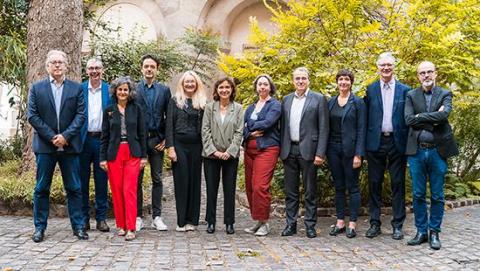
The governance of Sorbonne University, an executive body, is composed of the president, the deans of the faculties, the team of vice presidents as well as the student vice president.
The President, Nathalie Drach-Temam
Nathalie Drach-Temam was elected president of Sorbonne University by the new board of directors, which met on Monday, December 14, 2021.
Nathalie Drach-Temam's Career
With a background in mathematics, Nathalie Drach-Temam has been a professor in computer science since 2004 at Pierre and Marie Curie University (UPMC) and then at Sorbonne University following the merger. She previously taught and conducted research activities at the University of Rennes 1, the University of Paris-Sud and at Inria. Her area of expertise concerns the design of processors, the brains of any digital system, taking into account both hardware and software.
She created and led the ALSOC team (Architecture and Software for Systems on Chip) of the Paris 6 Computer Science Laboratory (LIP6 – managed by Sorbonne University and the CNRS) from 2006 to 2011. She also created and was in charge of the Master’s in Computer Science specialty ACSI (Architecture and Design of Integrated Systems) from 2005 to 2009. She has led numerous national and international academic and industrial projects and is currently a member of European and national networks of excellence and experts.
From 2012 to 2016, Nathalie Drach-Temam was a Vice President at UPMC in charge of career planning and student life, then in charge of education and career planning from 2016 to 2017. She was previously Vice President of Research, Innovation and Open Science at Sorbonne University from 2018 to 2021.
Nathalie Drach-Temam has been Vice President of the Udice Alliance since May 31, 2023, and is also a member of the Board of Directors of France Universités.

Responsible for steering the institution, this integrated governance leads a common policy, guaranteeing the continuity of the public service of higher education, research and innovation. It is supported by the faculty teams who implement the strategic plan in a way that is adapted to the specificities and expectations of their communities.
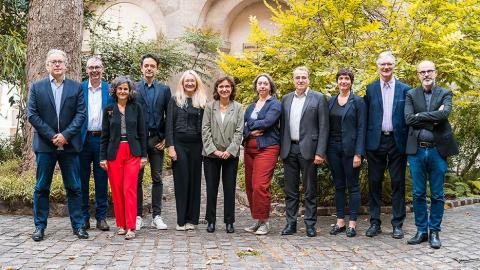
From left to right:
Guillaume Fiquet, Pascal Frey, Béatrice Perez, Pierre-Marie Chauvin, Élisabeth Angel-Perez, Nathalie Drach-Temam,
Stéphanie Bonneau, Bruno Riou, Marie-Aude Vitrani, Dominique Pateron, Stéphane Régnier.
The Vice Presidents
The following people were elected at the Board of Directors meeting on January 20, 2022.
The Vice President carries out a policy that ensures a stable and favorable scientific and material environment. This is in support of the different disciplines in the research units, and in respect of their specificity, to enable eco-responsible research at the highest level.
In agreement with the research units and the Clinical Research Groups, in close collaboration with the presidential and decanal teams, and in the transparency of the decision-making processes, it promotes disciplinary research and research at the interface of disciplines, both within the Sorbonne University Alliance and at the regional, national, European and international levels.
Through a committed funding policy and strong partnerships with research organizations, the vice presidency encourages the implementation of emerging projects and supports research that takes on the challenges of society, notably through Institutes and Initiatives, service units and shared platforms.
It works to simplify and rationalize procedures to enable professors and researchers to spend more time on their research, by promoting a multi-year approach to projects.
This approach defines and promotes an ambitious doctoral policy with the support of the doctoral college and pursues a committed postdoctoral policy. It ensures the quality of support for doctoral candidates and young researchers.
It promotes innovation and encourages the transfer of knowledge and expertise to civil society. To this end, it coordinates the University Innovation Pole (PUI) and its ecosystem, which will be deployed at Paris Parc. The dissemination of knowledge and scientific communication are part of its missions, as well as the material valorization and development of entrepreneurship.
It is particularly concerned with ensuring that science is trustworthy, honest, open and ethical.
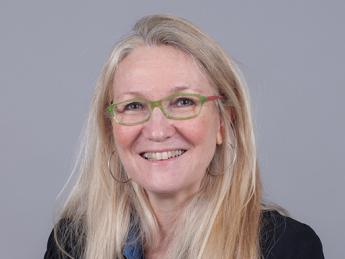
Élisabeth Angel-Perez, Vice President Research and Innovation; Vice President of the Research Commission
Élisabeth Angel-Perez is a professor of English literature at Sorbonne University. Her area of specialization is contemporary British theater. Elected professor at Paris-Sorbonne in 1999, she was deputy director of the UFR of Anglophone Studies from 2002 to 2012 and elected to the Board of Directors of Paris-Sorbonne. A founding member and director of the research team of literary anglicists (Voix Anglophones: Littérature et Esthétique) for several terms, she co-directed the Programme de Recherche Interdisciplinaire sur le Théâtre et les Pratiques Scéniques (PRITEPS) and more recently the Theatre Initiative. She also founded and directed the Innovation Service for Language Learning (SIAL) at Sorbonne University from 2012 to 2020.
Being a student has many facets: in the acquisition of knowledge and disciplinary skills; openness to the world, the arts and culture; and access to healthcare and study spaces. The Vice President is responsible for all educational policy, questions relating to education, student life and study conditions in a coherent project. He/she drives the University's initial and continuing education policy, as well as its student and campus life policy, in close collaboration with the student vice president and the faculties.
It has a global vision of the mission of lifelong learning, at the heart of and at the interface between disciplines, and defines its strategic directions. It ensures relations with secondary education and the close link that prevails at the University between research and education. Thus, it works, in conjunction with those in charge of academic programs, on the rapid transfer of knowledge from laboratories, initiatives and institutes. It coordinates pedagogical practices at the bachelor's and master's levels to ensure the quality of research-based training, the internationalization of education and the integration of students into the workforce. In the context of changing practices, particularly those linked to the advent of digital technology, it supports the policy of disseminating educational content.
Supporting Sorbonne University's Alumni policy, it ensures the enhancement and reinforcement of the institution's reputation in order to attract talent and diversify the public, thus promoting openness to society and the construction of the community of belonging of Sorbonne University students. It jointly promotes student success, academic, cultural and sports development, student commitment and student health.
It has a policy that makes each student a full-fledged actor in campus life, by supporting all student initiatives. It promotes a policy of inclusiveness and equality, diversity and the fight against discrimination, which guarantees everyone, regardless of gender, social origin, course of study or health, to ensure students benefit from the same rights and the best conditions.
Stéphanie Bonneau, Vice President of Education and Student Life, Vice President of the Education and University Life Commission
Stéphanie Bonneau is a biophysicist who prepared her thesis at the Muséum national d'Histoire naturelle (the French National Natural History Museum) in Claude Hélène's laboratory, and then worked in the cellular neurophysics laboratory at the Saints-Pères University Center. As a professor of physics at Sorbonne University, she has been conducting her research activities at the Jean Perrin laboratory (co-managed by Sorbonne University/CNRS) since 2012. She is interested in the dynamics and non-equilibrium maintenance of biological systems.
After directing the studies of the Master’s of Fundamental Physics and Applications from 2010 to 2015, she created the Master’s of Engineering Physics program at the Pierre-et-Marie Curie University. Her commitment led her to become a member of the board of the department of Physics until January 2018, then on the Scientific Council from 2009 to 2017 and of its Personnel Commission from 2013 to 2017.
From 2018 to 2021, she was vice president of Sorbonne University in charge of personnel and professional equality, as well as the budget in 2020 and 2021.

The Vice President is responsible for the University's policy of openness and commitment to the community, in conjunction with the Sorbonne University Alliance and its partners. He helps position the University as a key player in public debate and works to bring together the arts, sciences and humanities. This mobilizes the University's actors and resources to share the approaches and knowledge developed in its various components, to nourish societal debates, in a plural and contradictory perspective, and to reach out to diverse audiences, citizens as well as public and private decision-makers. Education, expertise and the cultivation of a critical eye are major public roles of the University, which must be supported by targeted actions.
The vice president is responsible for Sorbonne University's commitment to the transition to open and participatory sciences, in terms of education, research, innovation and access to scientific culture. He leads the actions related to obtaining the certification in "Science with and for society", by developing the mediation, expertise and consulting capacities of the University and by promoting scientific contributions to the media, the general public, as well as public and private actors. It leads the policy of promoting the cultural and scientific heritage of the University, notably through the Sorbonne University Presses and the University's scientific and artistic collections.
The actions carried out must help to understand the major contemporary issues through multidisciplinary perspectives but also to make the university better known, by promoting what the disciplines are and what they do, including rare disciplines, little known or unexpected works.
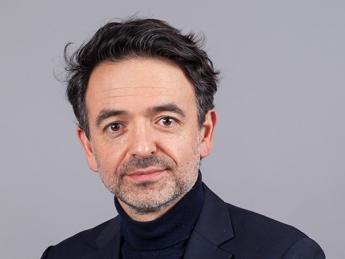
Pierre-Marie Chauvin, Vice President for the Arts, Sciences, Culture and Society, Vice President of the Board of Directors
Pierre-Marie Chauvin is an associate professor in sociology at the Faculty of Arts and Humanities at Sorbonne University and a researcher affiliated with the Groupe d'Etude des Méthodes de l'Analyse Sociologique de la Sorbonne (GEMASS) since 2010. After studying at the École Normale Supérieure (ENS) Paris-Saclay, obtaining the agrégation de sciences économiques et sociales, and a PhD at the University of Bordeaux, he completed a post-doctoral fellowship at the Center on Organizational Innovation at Columbia University (NYC) and at the ENS Paris-Saclay (ANR project "Appuis sociaux de l'entrepreneuriat").
His research focuses on economic activities, images, reputations and temporalities as social phenomena. After being responsible for the sociology degree and co-directing the master's degree "Chargé d'études sociologiques", he was vice dean of Human Resources and Resources of the Faculty of Arts and Humanities from 2018 to 2021 and an elected member of the Faculty of Arts and Humanities Council.
The Vice President defines and implements the University's international, territorial and socio-economic development policy. He coordinates all of these partnerships in a spirit of cooperation in all the fields covered by the University.
This policy ensures that the University's position as a major player in the European space is strengthened and developed and contributes to discussions defining European policy in higher education and research, particularly through the University's participation in European networks (LERU, EUA). It works on the development of the University's global strategic partnerships, notably for the 4EU+ Alliance and for Sorbonne Abu Dhabi in relation with the faculties. It strengthens and animates these strategic partnerships, in order to intensify the number of student and staff exchanges and to enrich their academic experiences. It initiates scientific collaborations and exchanges with other partners in more specific fields.
It coordinates and encourages the development of cooperation with members of the Sorbonne University Alliance, local authorities and socio-economic players, by participating in the best possible articulation with the University's innovation ecosystem, calls for tenders and international initiatives (e.g., Knowledge and Innovation Communities (KICs), networks of the European Alliance 4EU+).
It works to develop industrial partnerships and interfaces with socio-economic players on selected themes, integrating social innovation, investment in disruptive technologies and the sustainability of their uses, profound transformations that also involve initial and continuing education.
Guillaume Fiquet, Vice President for International Relations, and Territorial and Socio-Economic Partnerships
Guillaume Fiquet is a CNRS research director and a member of the Institute of Mineralogy, Physics of Materials and Cosmochemistry at Sorbonne University (IMPMC) since 1999. After a PhD at the University of Rennes 1 and a post-doctoral stay at the Max Planck Institute of Mainz, Guillaume Fiquet started his career at the ENS of Lyon before joining UPMC in 1999. He is a specialist in the physical properties of materials under extreme conditions and in the modeling of the interior of telluric planets. He was awarded the CNRS silver medal in 2011.
From 2009 to 2013, he was deputy director of the Institute of Mineralogy, Physics of Materials and Cosmochemistry at Sorbonne University, before becoming its director from 2014 to 2021. From 2012 to 2016, he chaired section 18 of the CNRS national committee and served on the scientific council of UPMC. From 2002 to 2011, he was a member of the scientific council of the European Synchrotron Radiation Facility (ESRF) and is currently a member of the scientific council of the European-XFEL (Hamburg).

The Vice President oversees the social agenda and the implementation of measures relating to careers, by continuously promoting social dialogue within the institution. He or she actively implements a policy of improving the quality of life at work, social action, recognition and appreciation of the commitment of the University's staff. It encourages everyone to experiment, particularly with regard to the organization of working hours and the right to make mistakes. It is responsible for implementing a human resources policy designed to support staff throughout their careers and to recognize and value their work. It promotes the implementation of adapted and individualized training for all personnel.
He/she initiates and coordinates a policy in favor of professional equality between men and women, the promotion of diversity and the fight against discrimination, paying particular attention to situations of disability.
The vice president is responsible for steering the University's budgetary policy and defining the strategic directions of multi-year resource management, in close collaboration with the entire presidential team. He/she ensures the implementation and monitoring of the management of the University's resources and means. To define and monitor these orientations, he/she takes into account the strategy of all of the institution's structures. It ensures that the decisions made include a dimension of financial and human sustainability, and that the choices made benefit the University as a whole, its development and its influence, with a view to equity.
It works to define a sustainable budget and ensures the implementation of a budgetary analysis and a clear and efficient management of financial resources, to enable the University to best ensure its public service missions, in the service of research and the transmission of knowledge. He/she oversees the development and monitoring of agreements on objectives and resources (COM).
The vice president drives and supports the digital transformation in all the University's missions and services. He/she pilots the digital master plan for the benefit of everyone. Working with the relevant vice presidents and vice deans, he/she is responsible for reflecting on and proposing changes in activities, professions and organizations in order to take advantage of new tools and uses. Its objectives are to implement a policy of coherent evolution of the information system and its interoperability, to support the communities in the appropriation of new technologies and the development of new digital uses. From a multi-year perspective, it ensures that the choice of resources, investments and their use are optimized in a continuous improvement process.
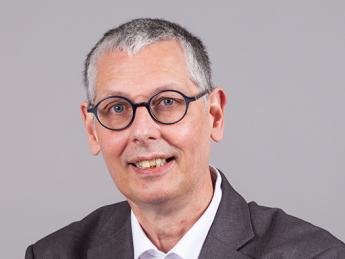
Pascal Frey, Vice President of Human, Financial and Digital Resources
Pascal Frey has been a professor of mathematics and a member of the Jacques-Louis Lions laboratory at Sorbonne University since 2003, after having been a research fellow at Inria Rocquencourt. His field of research concerns the design and analysis of mathematical models and numerical methods for scientific computing. His work has applications in many fields, from fluid mechanics to facial reconstruction or scientific visualization.
Director of the Institute of Computational and Data Sciences at Sorbonne University until 2021, he has led several national and European, academic and industrial projects. From 2018 to 2021, he was elected to the Research Commission of the Academic Council and member of the Transforming science and society program committee of the 4EU+ Alliance.
The student vice president was elected at the board of Director's meeting on January 20th, 2022.
Mélodie Tran Thuan, Student Vice President
A Sorbonne University student since 2020, Mélodie Tran Thuan began her studies with an "Accès Santé - LLCER" bachelor's degree. Two years later, she left the Faculty of Arts and Humanities for the Faculty of Health, enrolling in the Saint-Antoine school of midwifery.
Long involved in university life, she was elected to the Germanic and Nordic Studies UFR Council to represent her fellow students from 2022 to 2023. Later, with her passion for theater and German language literature, she became treasurer of the student association Théâtrallemand vôtre. Not wanting to limit herself to national activities, in 2023 she became a Sorbonne University student representative within the 4EU+ Alliance, extending her student commitment to the European level.
As student vice-president, Mélodie Tran Thuan aims to be a dedicated spokesperson for her community. She wants to encourage the creation of adapted services built in collaboration with students, governance teams and academic departments. She also wants to strive for inclusivity within our institution.
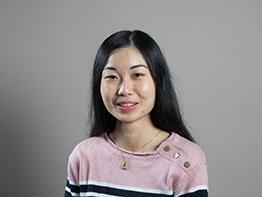
The Vice President is responsible for a multi-year property policy that enables the University to benefit from infrastructures that serve its missions.
He/she leads the elaboration of the multi-year real estate strategy plan (SPSI), the maintenance and major maintenance renewal plan (GER) and the collection of data and real estate indicators, enabling the development of a real estate strategy for Sorbonne University. It monitors real estate projects in conjunction with the faculties, ensuring their strategic interest, their financial sustainability, their implementation and their preventive maintenance. It integrates the sustainability dimension in all elements of this strategy.
It pilots the University's sustainable development policy in a participatory manner, with the entire University community. Based on the sustainable development charter, he/she leads the deployment and reinforcement of a specific action plan in the fields of sustainable consumption, education, sustainable mobility, biodiversity, public health and communication.

Dominique Pateron, Vice President, Heritage and Sustainable Development
Professor of emergency medicine since 2000, he headed an AP-HP emergency department from 1992 to 2019 initially in Bondy in Seine-Saint-Denis and then at Saint-Antoine Hospital in Paris. He is currently medical director of the Department of Intensive Care Medicine, Emergency and Geriatrics (DEMIURGE) of the AP-HP Sorbonne-University Hospital Group. He is a member of the CNU in the emergency medicine sub-section and chairs the Collège National Professionnel de Médecine d'Urgence. He was vice president of Heritage, Infrastructure, Accessibility and Sustainable Development during the previous term from 2018 to 2021.
With the goal of continuing to build a common culture at Sorbonne University, the missions carried out by the Vice President are designed to meet the needs for efficiency, simplification, sharing and collegiality. He/she addresses these issues by tackling regulatory and functional aspects as well as the development of strategic projects in a participatory approach.
Its objective is to define and implement an organizational improvement policy. It drives the evolution of Sorbonne University's organizations and operating practices. It leads the reflection on the governance model, its implementation through the statutes and the articulation of the institution's bodies. It leads the work of clarifying the decision-making circuits as close as possible to the actors in charge, for a coordinated operation of the different structures and services. It works on the definition of procedures that favor trust and rationality in a continuous improvement process. In permanent contact with the faculties and components, it organizes and facilitates the sharing of information and the consideration of field problems.
It establishes methods of co-construction to involve the community in the definition of strategic orientations and the institutional project. It defines a mechanism for listening to and working with all stakeholders in a framework that encourages the expression of individual proposals intended to benefit the group. It is responsible for the development of major transverse institutional projects in response to calls for projects (e.g. PIA) and evaluations (e.g. HCERES). It coordinates responses to strategic dialogues with the government.
Marie-Aude Vitrani, Vice President, Institutional Life and Participation
Marie-Aude Vitrani is an associate professor in mechanics at ISIR and Polytech Sorbonne. Her research focuses on robotic devices to assist minimally invasive surgery. Her work is at the interface between fundamental research, clinical research and industrial transfer. Since 2020, she has been deputy scientific director of the institute at the interface between engineering and medicine: the IUIS.
After participating in the creation in 2006 of the first engineering course in robotics, she was responsible for it between 2011 and 2016. She then participated in the creation of CAPSULE, where she was deputy director in charge of the pedagogical transformation.

The Deans of the Faculties
On December 16, 2021, Béatrice Perez was elected Dean of the Faculty of Arts and Humanities and Stéphane Régnier elected Dean of the Faculty of Science and Engineering by their respective faculty councils. Bruno Riou, re-elected in 2020, remains Dean of the Faculty of Medicine.
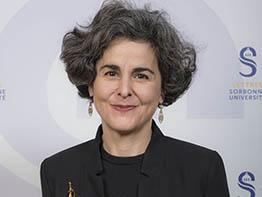
Béatrice Perez, Dean of the Faculty of Arts and Humanities
A former resident of the Thiers Foundation, Béatrice Perez is a university professor specializing in the history and civilization of modern Spain (16th-17th centuries), a discipline she has taught in the Department of Iberian and Latin American Studies since 2016. She is notably the author of Inquisition, Pouvoir, Société. La province de Séville et ses judéoconvers sous les Rois Catholiques (awarded the Alberto Benveniste Research Prize 2008) Les marchands de Séville. Une société inquiète (XVe-XVIe siècle). She was Vice Dean of International Relations for the Faculty of Arts and Humanities under Dean Alain Tallon, and is responsible for the international bi-diploma master's degree "Atlantic Worlds" linking the CLEA-CHECLA (Civilization and History of Classical Spain) research teams and the Department of Modern History at the University of Seville.
Frédérique Peronnet, Dean of the Faculty of Science and Engineering
Elected dean on June 6, 2024, Frédérique Peronnet is a geneticist and CNRS research director, attached to Section 21 "Organization, expression and evolution of genomes", and co-directs the "Epigenetic control of developmental homeostasis and plasticity" team within the Developmental Biology Laboratory of the Institut de Biologie Paris-Seine (IBPS). She also teaches molecular biology, and orientation and professional insertion (OIP) for undergraduate studies, and epigenetics in laster's and doctoral programs. Within the Faculty of Science and Engineering, Frédérique Peronnet has held the positions of Vice-Dean for Human Resources and Social Issues, Vice-Dean for Research, Deputy Director of the Developmental Biology Laboratory (UMR 7622), and Co-Chair of the Scientific Advisory Board of the Life Sciences UFR.

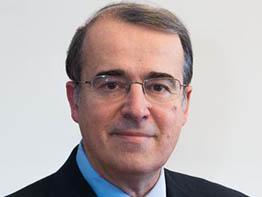
Bruno Riou, Dean of the faculty of Medicine
Bruno Riou has been dean of the Sorbonne University Faculty of Medicine since February 12, 2015, and was re-elected on February 25, 2020 by the Faculty Council for a 5-year term. A university professor of anesthesia and intensive care and then of emergency medicine, he was head of the emergency department at the Pitié-Salpêtrière Hospital from 1999 to 2019. Today, he is the AP-HP's crisis medical director for the Covid-19 epidemic and head of the organ and tissue retrieval coordination service at Pitié-Salpêtrière. Professor Bruno Riou is President of the Ile-de-France Health Deans' Conference and Vice-President of the AP-HP Board of Directors. A former vice president of health at UPMC, he has been involved in the management of numerous crises in the past, including the attacks of November 13, 2015.